
ABOUT IBNIC
Independent. Nonprofit. No commercial stake.
:
IBNIC — the International Board of NLP and Integrative Coaching — is an independent, nonprofit accreditation body that sets and enforces professional standards for NLP training worldwide. Its board is international and cross-disciplinary. No board member owns or operates an NLP training company. Accreditation decisions are made through structured peer review — not by any single individual, and not for commercial gain.
9
Published accreditation pillars
8
Countries represented on the board
0
Board members with a commercial stake in NLP training
20yr
Professional thinking behind the standards
• Independent peer review
• Nonprofit — no profit distributions
• No commercial stake in decisions
• International board
• Published standards framework
What Is IBNIC
An accreditation body with no stake in the outcome.
IBNIC accredits training schools and programs against defined criteria covering ethics, teaching quality, learner safety, business integrity, and real-world competence. Its board is international and cross-disciplinary, appointed for expertise — not affiliation or lineage.
IBNIC operates as a nonprofit. All fees collected support administration, governance, independent audits, and the credential verification system. There are no profit distributions. No board member receives commercial benefit from accreditation decisions.
The NLP field has never lacked bodies willing to certify. What it has lacked is a body with no commercial interest in the outcome of its own assessments — and no stake in the disputes that have defined the field’s governance for decades. IBNIC was built to occupy that space: for the trainers who have already built something worth verifying, and for the students who deserve to know it.
How IBNIC Began
Not a startup. A profession’s response to a problem it had accumulated.
A network of senior practitioners — across lineages, without institutional backing, without commercial motivation — began meeting with regularity. The conversations were about standards: how they teach, how they run their schools, how they treat students, and how they hold themselves accountable. The recognition was straightforward: exceptional practitioners exist in every tradition. What would it look like to bring the best of them together under a shared standard?
Those standards began to take shape — quietly, within the group, without announcement. As more schools with shared values sought to join, the need to formalize what membership required became unavoidable. What emerged from that process — with all the lessons the field had accumulated — is IBNIC.
What IBNIC became was not planned. It was the natural outcome of serious people holding themselves to a serious standard, and others recognizing that standard as the one worth meeting. Not a rival faction. Not a movement. A professional commitment that became, over time, an institution.
Not a rival faction. Not a movement. A professional commitment that became, over time, an institution.
THE FULL HISTORY OF THE FIELD
To understand where IBNIC came from, it helps to understand the field it was built for. The timeline below traces the governance history of NLP — from its origins through the legal battles that nearly destroyed it, to the practitioners who quietly began building something different.
The Nine Pillars
How a profession’s governance became the problem IBNIC was built to solve.
This is not a criticism of any individual or organization. It is a description of what a field looks like when it has grown faster than its governance — and what it requires to close that gap. The practitioners who built IBNIC understood these dynamics from direct professional experience. What follows is the history they lived.
1970s
NLP emerged from the University of California — a methodology built on genuine insight into human communication and change. The credentialing system that grew alongside it was shaped by the world it was created in: small, contained, and built for a professional moment the field has long since left behind.
1979
The field’s first official certifying body is established. Within three years it passes through bankruptcy and changes hands.
1981
The professional partnership between NLP’s co-founders ended in a legal dispute. What follows is a decade of competing claims and institutional fragmentation, a professional community increasingly defined by allegiance rather than by shared standards.
Early 1980s
The field divides. Competing versions of the methodology emerge, each claiming to correct its predecessor’s flaws. Multiple credentialing structures follow. Practitioners who contributed to building the field navigate an environment where institutional loyalty has become more professionally consequential than professional competence.
1990s
New credentialing bodies continue to emerge — each reflecting the commercial interests and lineage loyalties of its founders. No body recognizes another’s credentials as equivalent. The dynamic that will define the field for a generation is established: my lineage is better than yours. NLP expands into Asia and other markets with no quality infrastructure to support that expansion. The credential titles anyone can claim — and many do, without the preparation those titles imply.
1996–2000
Litigation in the United States and the United Kingdom attempts to establish exclusive ownership of NLP itself. The courts rule against the claim. The finding is clear: NLP, NLP Practitioner, NLP Master Practitioner, NLP Trainer, and NLP Master Trainer are generic terms. No one owns them. No one controls them. Anyone can use them — with or without training, without oversight, without consequence. The cases nearly destroyed the professional community. When they settle, the door to unregulated expansion is wider than ever.
Early 2000s
ICF and EMCC establish coaching credentialing frameworks with published standards and independent oversight. Positive psychology — formally founded by Seligman and Csikszentmihalyi in 2000 — and neuroscience are beginning to reshape what evidence-based professional practice looks like. NLP practitioners working as coaches pursue ICF and EMCC credentials because they carry independent weight. NLP bodies do not follow. The next generation takes the field in new directions with no shared quality framework to guide them.
2004
ICF formally accredits its first fully online coach training program. The professional world moves forward. NLP lineage bodies do not follow.
None of this is a judgment on individual practitioners. The field has always contained serious professionals who held themselves to standards the existing infrastructure was never designed to verify. The problem was never the absence of quality. It was the absence of any independent mechanism to make quality visible. IBNIC was built for those practitioners — and for the students and organizations who deserve to know the difference.
Mid 2000s
A network of senior practitioners across lineages, without institutional backing or commercial motivation, begins to meet regularly. The conversations are about standards: how they teach, how they run their schools, how they treat students, and how they hold themselves accountable. The recognition is straightforward: exceptional practitioners exist in every tradition. What would it look like to bring the best of them together under a shared standard? Those standards begin to take shape quietly, within the group, without announcement.
Early 2010s
Serious trainers begin building independent schools around standards rather than affiliation, credentials on their own terms, practices that refuse to transmit the field’s conflicts to the next generation. The global coaching and personal development industry generates billions in annual revenue. The demand for credible, independently verified NLP credentials continues to grow. The supply does not.
Mid 2010s
The network’s standards are formally documented. Credentials are issued — on their own terms, under their own mark. As more schools with shared values seek to join, the need to formalize what membership requires becomes unavoidable. What emerges from that process — with all the lessons the field has accumulated — is IBNIC: a body with standards for live and online delivery, applied without exception to both..
2018–2020
Data protection regulations create new professional obligations globally. AI-assisted coaching tools raise questions about digital ethics that lineage bodies are not equipped to answer. The pandemic forced the entire training industry online overnight, exposing the absence of any quality framework for professional NLP delivery across formats.
2025
A milestone. The credential verification system goes live — code-based, GDPR-aligned, and built for a world where digital privacy is not optional. Any client, employer, or professional peer can verify a credential instantly — without a public directory, without exposing personal data. For the first time, a practitioner’s credentials stand independently of any single licensing body’s continued existence or commercial health.
2026 and beyond
IBNIC’s standards framework continues to evolve — integrating AI literacy, digital ethics, and online delivery competencies as living requirements. The question the field has avoided for decades is becoming impossible to ignore: what happens to credentials, schools, and students when the lineage holders are no longer there to hold them? IBNIC was built so that the question has an answer.
The Field IBNIC Was Built For
A profession that outgrew its governance.
NLP training is now a global industry. It is delivered across six continents, in dozens of languages, through formats that range from intensive residential programs to fully online pathways. The practitioners who deliver it work in coaching practices, therapeutic contexts, corporate learning environments, and leadership development programs — professional settings that carry their own accountability expectations and that NLP’s original credentialing infrastructure was never designed to serve.
The same structural absence that left students without independent recourse left trainers without a professional community that was not also a competitive battlefield. Serious practitioners who wanted simply to deliver excellent training, maintain ethical practices, and build sustainable schools found themselves operating in a market that rewarded tribalism over quality.
A field without independent oversight is one where students have no independent recourse. In a market where a school can cancel a program, retain fees, and face no consequence beyond reputational damage within its own community, the student carries all of the risk. IBNIC’s complaint procedure exists for exactly that reason.
Why Independence Matters
Accreditation only means something when the decision is independent.
The NLP field has had credentialing systems since its earliest days. What it has not had is accreditation that is structurally independent of the commercial interests of the organizations doing the credentialing. When the body that awards a credential also sells the training that leads to it, the credential reflects completion, not independently assessed competence.
A body that derives revenue from the schools it accredits, and whose governance rests in individuals who benefit commercially from the field’s growth, cannot provide the independent oversight that the word accreditation implies. This is not a question of motivation. It is a question of structure. IBNIC’s answer to that structural problem is simple: no board member may hold a commercial stake in NLP training as a trainer, practitioner, or school owner. Accreditation decisions are made through structured peer review. No single individual determines an outcome.
IBNIC’s board spans Denmark, the Netherlands, the United States, Malaysia, Indonesia, Singapore, and Albania, with further appointments in progress. This geographic distribution reflects IBNIC’s commitment to standards that apply across the professional contexts and cultural environments in which NLP is now delivered — not only in the markets where it originated.
— No board member owns or operates an NLP training company; this is a foundational condition of board membership
— Accreditation decisions are made by peer reviewers with no commercial connection to the applying school
— IBNIC operates as a nonprofit — there are no profit distributions and no commercial incentive to approve applications
— The Nine Pillars are published and available to anyone before any application is made
— Complaint reviews are conducted by panels with no connection to the school under review
The Board
International. Cross-disciplinary. No commercial stake.
IBNIC’s board is appointed for expertise, not affiliation. Board members bring backgrounds spanning NLP practice, neuroscience, psychology, organizational development, curriculum design, legal frameworks, and human resources — across six countries and counting.
No board member owns or operates an NLP training company. This is not a preference — it is a foundational condition of board membership, reviewed at the point of appointment and throughout the term.

THE NETHERLANDS
With over 25 years of leadership and coaching experience, Richard has led teams of up to 300 at top-tier organisations including Apple and Xerox. First introduced to the foundations of NLP more than 30 years ago, and now an expert in Positive Psychology, he runs his own coaching and training practice helping people develop, grow, and lead with clarity, emotional intelligence, and values-based authenticity. Known for guiding high-performing teams through complex and high-pressure environments, Richard brings to IBNIC a wealth of real-world insight into how people think, learn, and thrive across cultures and generations — all through the lens of NLP.

Denmark
Anne Hjortsholm brings a rare combination of corporate scale, behavioral insight, and applied leadership to the field of NLP and integrative coaching. With a decade at Meta (Facebook), she worked closely with small businesses navigating visibility, credibility, and growth in complex digital environments. As founder of Mindkubator, she focuses on the “operating system” behind human behavior, translating neuroscience into practical tools for leadership, performance and communication. With a MSc BA and a strong leadership background, she contributes a systems-based perspective that aligns with IBNIC’s commitment to relevant, ethical, and real-world standards.

MALAYSIA
Prof. Dr. Azizan Osman is a certified NLP Master Practitioner who has spent more than two decades applying NLP to elevate leadership, shift behavior, and drive performance transformation among entrepreneurs across Southeast Asia.
As the Founder and Chairman of RichWorks Group, he integrates NLP into organizational development, communication mastery, and high-level business coaching to help leaders think clearly, act decisively, and build companies with stronger alignment and culture.
His work is grounded in a robust academic and professional background, including a Ph.D. in Business, advanced degrees from the United Kingdom, and executive education from Columbia Business School, Kellogg, and IMD.
Through his role as a major shareholder of the listed company, ManagePay Systems Berhad (MPay), he continues to influence Malaysia’s SME and fintech ecosystem while championing the practical, real-world application of NLP in leadership and business growth.

UNITED STATES
Courtney is a strategic operator and certified NLP Master Practitioner who helps leaders and organizations turn vision into practical, measurable growth. Her work combines curriculum design, organizational development, and relationship-driven systems to improve how people lead, collaborate, and make decisions. As Co-Founder and COO of Entrepreneurs Focused on Growth (EFOGI), she designs and runs structured environments—through training, experiences, and operational frameworks—where trust, alignment, and results are built intentionally rather than left to chance. Courtney is known for bringing clarity to complex systems, applying NLP and behavioral insight ethically, and helping organizations scale without losing integrity, momentum, or their human edge.

UNITED STATES
Tony is a negotiation expert, speaker, and transformational coach whose work blends ethical influence, emotional intelligence, and principles drawn from NLP to help leaders communicate with clarity and integrity. Having trained more than 30,000 professionals—including teams at Apple, Microsoft, Red Bull, and Boeing—Tony specializes in teaching coaches, entrepreneurs, and organizations how to negotiate without pressure, fear, or manipulation. His approach integrates NLP-based reframing, pattern recognition, and state management with a heart-centered philosophy rooted in connection and alignment. As the founder of The Heart of the Deal and the Fear to Love Fellowship, Tony is dedicated to elevating the standards of negotiation and coaching by grounding them in ethics, self-awareness, and transformational change

GLOBAL
IBNIC has appointed a senior advisor to support ethical clarity and strong professional standards across its training environments.
He brings over two decades of experience in human behavior, leadership support, and complex organizational dynamics, with a background in international non-profit environments where integrity, fairness, and accountability are essential.
Known for his calm and precise approach, he was selected for his ability to navigate challenging situations with clarity and steadiness, helping ensure that learning spaces remain respectful, well-held, and professionally aligned.

INDONESIA & SINGAPORE
Paulina Purnomowati spent more than two decades as a senior executive across global luxury and consumer brands — Procter & Gamble, Chanel, Tod’s, and Valiram among them — holding country manager and general manager roles across Indonesia and Southeast Asia. She holds an MBA in International Business and Marketing from Northeastern University in Boston, and was Indonesia’s sole representative on The Apprentice: ONE Championship Edition on Netflix, reaching the Top 5.
She now leads Lumorá Asia, an executive leadership practice operating across Indonesia and Singapore, where she works with senior leaders through an integrative model grounded in neuro-linguistic programming, alongside somatic awareness, trauma-informed frameworks, and psychological assessment. Her practice is built on a direct conviction: that effective leadership is inseparable from self-awareness, and that NLP is one of the most precise tools available for developing both.
Paulina brings to the IBNIC board deep firsthand knowledge of the Southeast Asian professional context — its organizational cultures, its leadership pressures, and the specific environments in which NLP is now practiced and taught.
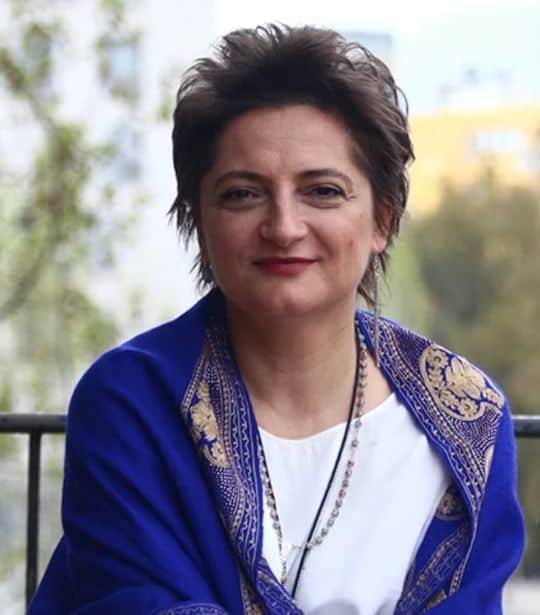
ALBANIA
Associate Professor at the Mediterranean University of Albania, Dr. Fleura Shkëmbi holds dual degrees in clinical psychology, a doctorate focused on anxiety treatment through clinical hypnotherapy, and a postdoctoral specialization in mindfulness and stress management. She trained in clinical hypnosis at the London College of Clinical Hypnosis and is a certified NLP Master Practitioner. Her published research spans anxiety, depression, emotional intelligence, and group dynamics, with work appearing in SAGE Open and European Psychiatry.
Through Inner Life Psychology, her Tirana-based practice, she works at the intersection of clinical psychology, hypnotherapy, NLP, and mindfulness — a recognized figure in Albanian public life, with regular television appearances and a substantial following. She has spoken at international conferences across Europe and most recently addressed the 2026 LEAPin Albania conference.
Dr. Shkëmbi represents the clinical and academic grounding that IBNIC’s standards framework requires — bringing research credibility, practitioner depth, and direct knowledge of the Southeast European context to the board’s work.
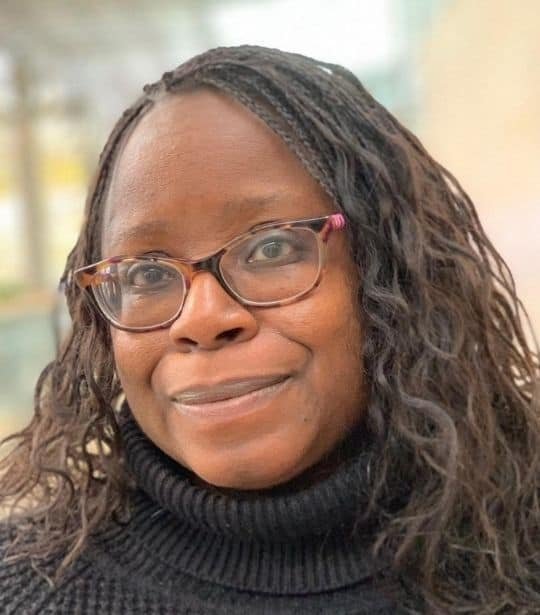
UNITED STATES
Michelle holds a Master of Arts in Interdisciplinary Studies from Liberty University, integrating applied psychology, crisis counseling, trauma-informed practice, positive psychology, and organizational psychology. She also holds a Health and Wellness Coach Certificate from Georgetown University. Her career has moved through military service, corporate roles, and business ownership — a trajectory that shapes both the populations she serves and the frameworks she uses to serve them.
As founder of The Directional Coach, Inc., based in the Washington, DC area, she works with emerging adults, parents, veterans, and underserved communities through an integrative model that draws on NLP, positive psychology, and science-based interventions. She is an NLP Master Practitioner and has developed the Directional Path™, a proprietary coaching framework for navigating identity shifts, career uncertainty, and life transitions.
Michelle brings to the IBNIC board a practitioner’s perspective on NLP in applied coaching contexts, and direct experience of the ethical and protective considerations that matter most when coaching reaches vulnerable populations.wledge of the Southeast European context to the board’s work.
JOIN THE BOARD
Board appointments are made through a structured process.
IBNIC appoints board members whose expertise strengthens the body’s standards development, governance credibility, and geographic reach. Board appointments are made through a structured nomination and review process. Candidates with backgrounds spanning the following areas are encouraged to express interest. To begin a conversation about board membership, contact IBNIC directly through the contact page.
— NLP practice and trainer training
— Neuroscience and psychology
— Organizational development and leadership
— Curriculum design and education standards
— Legal and professional standards frameworks
— Artificial intelligence and technology ethics
— Learning and development
Take the Next Step
Ready to pursue independent accreditation?
The standard is published. The process is structured. The decision is independent. If your practice meets the Nine Pillars, IBNIC accreditation is within reach.
Open to all NLP lineages · Nonprofit · No commercial stake
IBNIC
International Board of NLP and Integrative Coaching. Independent.
Nonprofit. Global.
30 N Gould St, Ste N
Sheridan, WY 82801
United States
info@ibnic.org
© 2026 IBNIC — International Board of NLP and Integrative Coaching. All rights reserved.